

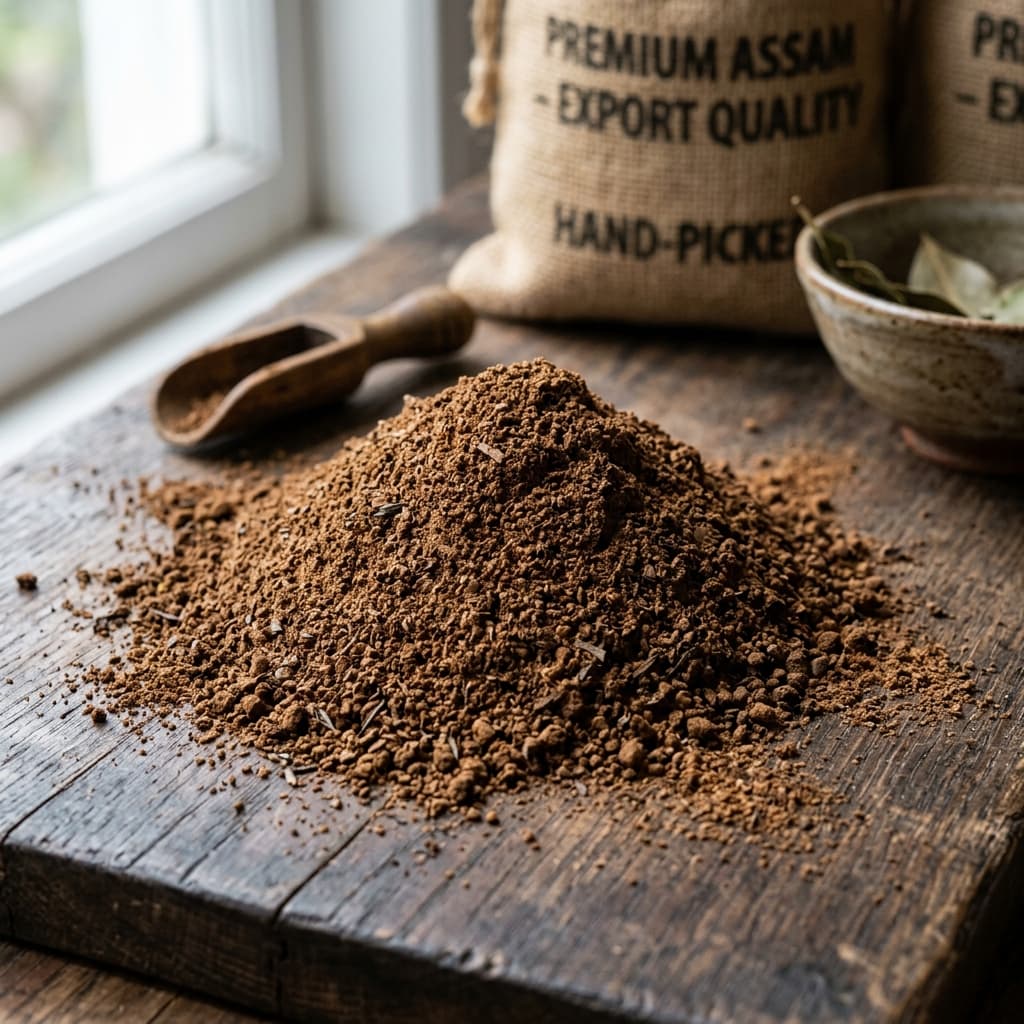
1. Grade is not a flavour adjective
“Premium tea” does not survive a blender’s intake lab. Indian export tea is bought as cut type + leaf grade + liquor target. The three commercial families Intact already lists on the beverages hub are CTC, orthodox, and powder.
This guide is the tea spoke. Coffee species comparison is on Arabica vs Robusta coffee export. The combined category narrative stays on commercial beverage sourcing.
| Family | How it is made | Typical buyer use |
|---|---|---|
| Orthodox | Rolled / twisted whole or broken leaf | Retail leaf, origin blends, slower brew |
| CTC (Crush, Tear, Curl) | Mechanically cut granules | Fast brew, chai, food service, many GCC packs |
| Powder / dust / fannings | Fine fractions or specified soluble grind | Tea bags, instant, RTD, industrial extract |
Liquor strength, colour, and brew time follow the cut. A CTC dust will not cup like an orthodox Pekoe, and should not be substituted on a standing order without a written change.
2. What buyers should specify
- Cut family — orthodox, CTC, or powder. Do not write “black tea” alone.
- Grade language — use the mill’s grade list (for example common CTC dust/fannings bands, or orthodox leaf grades) and attach a type sample.
- Moisture — named limit; tea is hygroscopic.
- Sensory — liquor colour, brightness, and off-note rejects.
- Chemistry if required — polyphenol / tannin conversation belongs in QA, not in marketing copy. The beverage overview already notes that controlled drying helps retain antioxidants; we do not print a percentage here without a lot assay.
- Micro — especially for cold-soluble or RTD use.
- Packing — kraft-lined bags, cartons, or bulk bags; humidity control for ocean transit.
- Incoterm — FOB, CFR, or CIF.
Private-label retail tins are a packing project, not a grade. Agree artwork, food-contact film, and carton marks after the liquor target is locked.
3. Supply security for beverage plants
Tea is seasonal at origin and continuous at the factory. Brands that cannot miss a retail window should:
- Approve a type sample and keep a retention tin.
- Write a lot-match rule (how far a new invoice can drift from the type).
- Use structured contracts — the same idea as high-volume agricultural supply chains — rather than spot buying every container.
Intact Global Exports sources CTC, orthodox, and powder formats for retail blending and food-service packs. Availability follows estate and processor calendars; we confirm grade before we firm a shipment window.
4. Documents
Tea exports typically move with commercial documents, certificate of origin, and a CoA. Phytosanitary and fumigation depend on destination. The Tea Board of India is the public reference for grade and export orientation. Destination MRL and labelling are applied to the named lot.
5. Cluster placement
- Hub: Tea and coffee bulk export
- Sibling: Arabica vs Robusta
- Sub-pillar: Commercial beverage sourcing
- Produce cold-chain is a different cluster: fresh produce export
Source CTC, orthodox, or tea powder
Intact Global Exports supplies export-grade Indian tea against a written cut and liquor target. Send monthly volume, pack format, and destination — we return grade options and a sample path.
Sources & References
- Tea Board of India — grade and export orientation
- Related: Beverages category · Arabica vs Robusta · Beverage overview